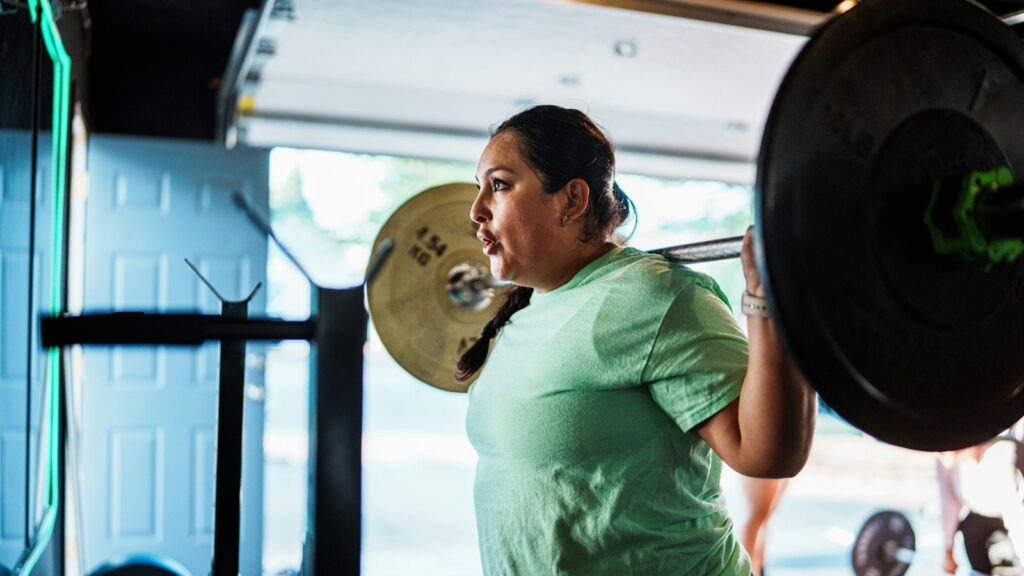
If a pharmaceutical company could patent resistance training, it would be the most aggressively marketed product in medicine. It improves strength, balance, bone density, insulin sensitivity, blood pressure and mood, and the evidence extends into the tenth decade of life. It is also the intervention most adults over 50 are not doing.
Key takeaways
- Major health bodies recommend muscle-strengthening activity on at least two days a week for adults of all ages.
- Trials in adults in their eighties and nineties have demonstrated substantial strength and mobility improvements.
- Two sessions a week covering the major muscle groups is enough to produce real change.
- Progressive load is the essential ingredient. Repeating the same easy effort indefinitely does not work.
- Existing heart, joint or blood pressure conditions warrant a conversation with your GP first.
What the evidence base looks like
Resistance training is unusual in having a consistent evidence base across a very wide age range. Studies in frail older adults, including nonagenarians in residential care, have repeatedly found meaningful improvements in strength, walking speed and the ability to perform daily tasks after a few weeks of supervised progressive training.
This matters because the assumption in the other direction is so common: that after a certain age the tissue simply will not respond. The research does not support that. Older muscle responds more slowly than younger muscle, and it requires adequate protein to do so, but it responds.
The benefits also extend well beyond strength — bone density, glucose regulation, blood pressure, balance and fall risk, and measures of mood and cognition all appear in the literature.
Muscle tissue does not know how old you are. It responds to the demand placed on it, and it keeps responding into the tenth decade of life.On the trainability of older muscle
What counts as strength training
Not necessarily a gym. What is required is resistance and progression.
- Bodyweight — sit-to-stands, wall or incline push-ups, step-ups, calf raises, planks.
- Resistance bands — inexpensive, joint-friendly, and easy to progress by shortening the band.
- Dumbbells or kettlebells — the most straightforward way to add load precisely.
- Machines — often the best starting point if balance or confidence is a concern.
- Loaded carries — shopping bags count, and they train grip, which matters.
A starting template
Two sessions a week, non-consecutive days, twenty to thirty minutes. Cover five patterns:
- Squat or sit-to-stand — legs and hips.
- Push — incline or wall push-up, or a chest press.
- Pull — band row or seated row.
- Hinge — a controlled deadlift pattern, or hip bridges.
- Carry — walk 20 metres holding something heavy in each hand.
Two sets of eight to twelve repetitions each, stopping two or three repetitions short of failure. The last repetition should feel genuinely hard; if it does not, the load is too light to drive adaptation.
Progression is the whole point
Each fortnight, make one thing harder: a little more weight, one more repetition, a slower lowering phase, or one extra set. Without progression the stimulus disappears and so do the results. This is the most common reason people train for months and see nothing.
Talk to your GP first if you have heart disease, uncontrolled high blood pressure, a recent injury or joint replacement, osteoporosis, or you have been inactive for a long time. The advice is almost never “don’t” — it is usually about which movements to start with and how quickly to load them.
What to expect, and when
The first four to six weeks bring largely neural gains — your nervous system gets better at recruiting the muscle you already have. Strength rises noticeably while size does not change much, and this is normal rather than disappointing. Visible changes in muscle typically take eight to twelve weeks, and depend heavily on eating enough protein.
Expect some muscle soreness in the first fortnight. Sharp joint pain is different, and is a signal to change the movement rather than push through it.
Sources and further reading
- Centers for Disease Control and Prevention. Physical activity basics and adult guidelines. www.cdc.gov/physical-activity/
- World Health Organization. Physical activity fact sheet and guidelines. www.who.int/health-topics/physical-activity
- National Institute on Aging. Health topics: exercise, nutrition and healthy ageing. www.nia.nih.gov/health
- NHS. Live Well: eat well, exercise and sleep guidance. www.nhs.uk/live-well/
This article is general information and is not a substitute for advice from a qualified clinician.