Sarcopenia is easy to diagnose late and hard to notice early. By the time weakness is obvious enough to worry about, the process has usually been running for years. The signs below are the ones clinicians actually screen for — and most of them are things you can observe yourself this week.
Key takeaways
- Sarcopenia is assessed on strength and function first, and muscle mass second.
- Grip strength and walking speed are the two most widely used screening measures.
- Several signs — poor appetite, sudden weakness, unintentional weight loss — have other possible causes and should be assessed by a clinician.
- Screening is simple, free and can be done at home in under five minutes.
The seven signs
1. Your grip is weakening
Grip strength is one of the most studied functional markers in older adults, and it correlates with whole-body strength. The everyday version of this test is mundane: jar lids, taps, carrier bags, wringing out a cloth. If tasks that were automatic now require a second attempt, that is data.
2. You are slower on foot
Habitual walking speed is a standard screening measure. You will usually notice it socially before you notice it physically — being left behind slightly on a pavement, or finding a familiar walk now takes noticeably longer.
3. Getting out of a chair takes effort
The sit-to-stand test is a clinical staple because it isolates the muscles that matter most for independence. Try it: sit on a dining chair, arms crossed over your chest, and stand up and sit down as many times as you can in thirty seconds. Reaching for the armrests is itself the finding.
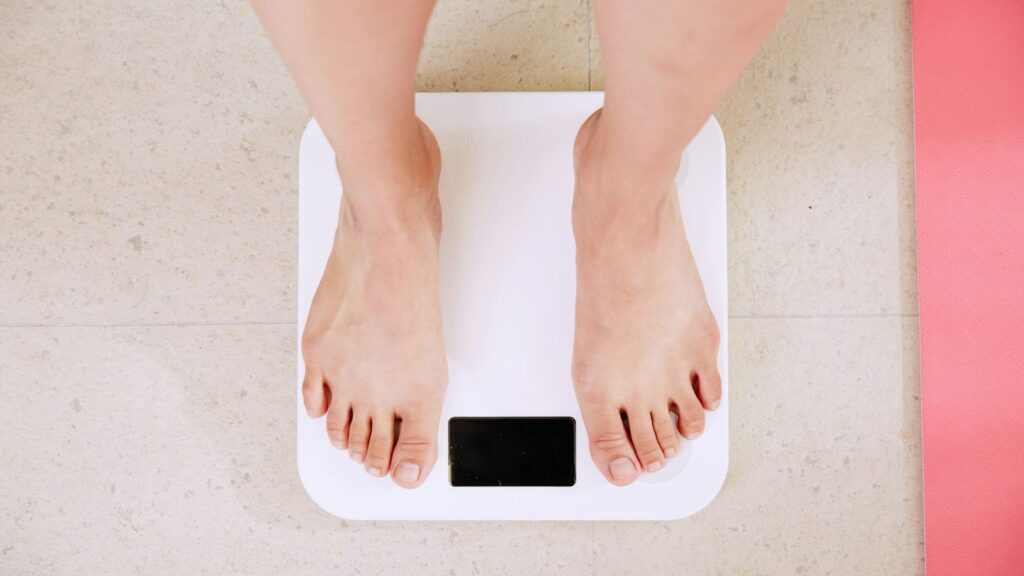
4. Your weight is stable but your shape has changed
Clothes fitting differently while the scale stays put is the signature of muscle being replaced by fat. This is the sign most often dismissed, because the number that people actually monitor has not moved.
The question is never simply how much muscle you have. It is what that muscle can still do for you.The functional basis of sarcopenia screening
The three that need a clinician
5. Stamina has dropped without an obvious cause
Less muscle means less capacity to buffer ordinary exertion, so fatigue arrives earlier in the day. But fatigue is also the least specific symptom in medicine — thyroid problems, anaemia, sleep apnoea, depression and medication side effects all produce it. It is worth investigating rather than assuming.
6. Your appetite has faded
Appetite tends to decline with age, and reduced intake accelerates muscle loss, which further reduces activity and appetite. It is a self-reinforcing loop and one of the clearest reasons to intervene early rather than wait.
7. You have become unsteady, or you have fallen
Balance depends on muscles responding fast enough to correct you. Any fall in an adult over 60 — even one that caused no injury — is a reason to ask for a strength and balance assessment.
A five-minute self-check
None of this replaces a clinical assessment, but it gives you something concrete to bring to one.
- Sit-to-stand: count repetitions in thirty seconds, arms crossed.
- Grip: note any task that has become two-handed.
- Walking: time a route you walk regularly and compare it in three months.
- Protein audit: write down the protein in your breakfast honestly. Most people are surprised.
Write the numbers down. The value of these measures is almost entirely in the comparison over time.
Important. Unintentional weight loss, rapid-onset weakness, or weakness affecting one side of the body are not typical of sarcopenia and warrant prompt medical attention. Use this list to start a conversation with a clinician, not to replace one.
What comes next
If several of these apply, the response is not dramatic. It is resistance training twice a week, a protein target at every meal, and a conversation with your GP about anything on the list that could have another cause. The evidence that muscle responds to training at any age is among the more reliable findings in the field — which makes early detection genuinely worth the effort.
Sources and further reading
- National Institute on Aging. Health topics: exercise, nutrition and healthy ageing. www.nia.nih.gov/health
- NHS. Live Well: eat well, exercise and sleep guidance. www.nhs.uk/live-well/
- Centers for Disease Control and Prevention. Physical activity basics and adult guidelines. www.cdc.gov/physical-activity/
- Mayo Clinic. Healthy lifestyle: nutrition and fitness. www.mayoclinic.org/healthy-lifestyle
This article is general information and is not a substitute for advice from a qualified clinician.